

Opening A Load Bearing Wall Between Kitchen And Living Room
Article may have affiliate links. If you make a purchase, I may earn a tiny commission at no extra cost to you. Big thanks for supporting my small business.
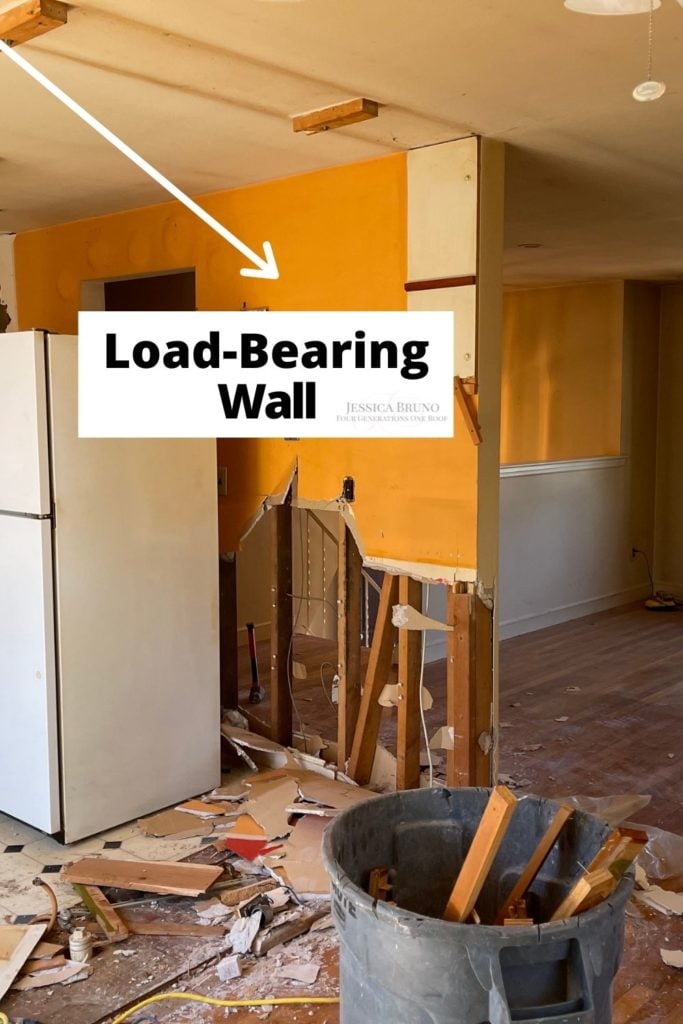
Opening a load bearing wall between kitchen and living room is one of the smartest renovations you can do in a split level home. Today I’m walking you through exactly how Jim tackled this transformation.
If you’re familiar with split level homes, you know the rooms are small and boxy. By removing the load bearing wall between the kitchen and living room, you create an open concept living space that significantly enhances the architectural interior (and resale value!) of the home.
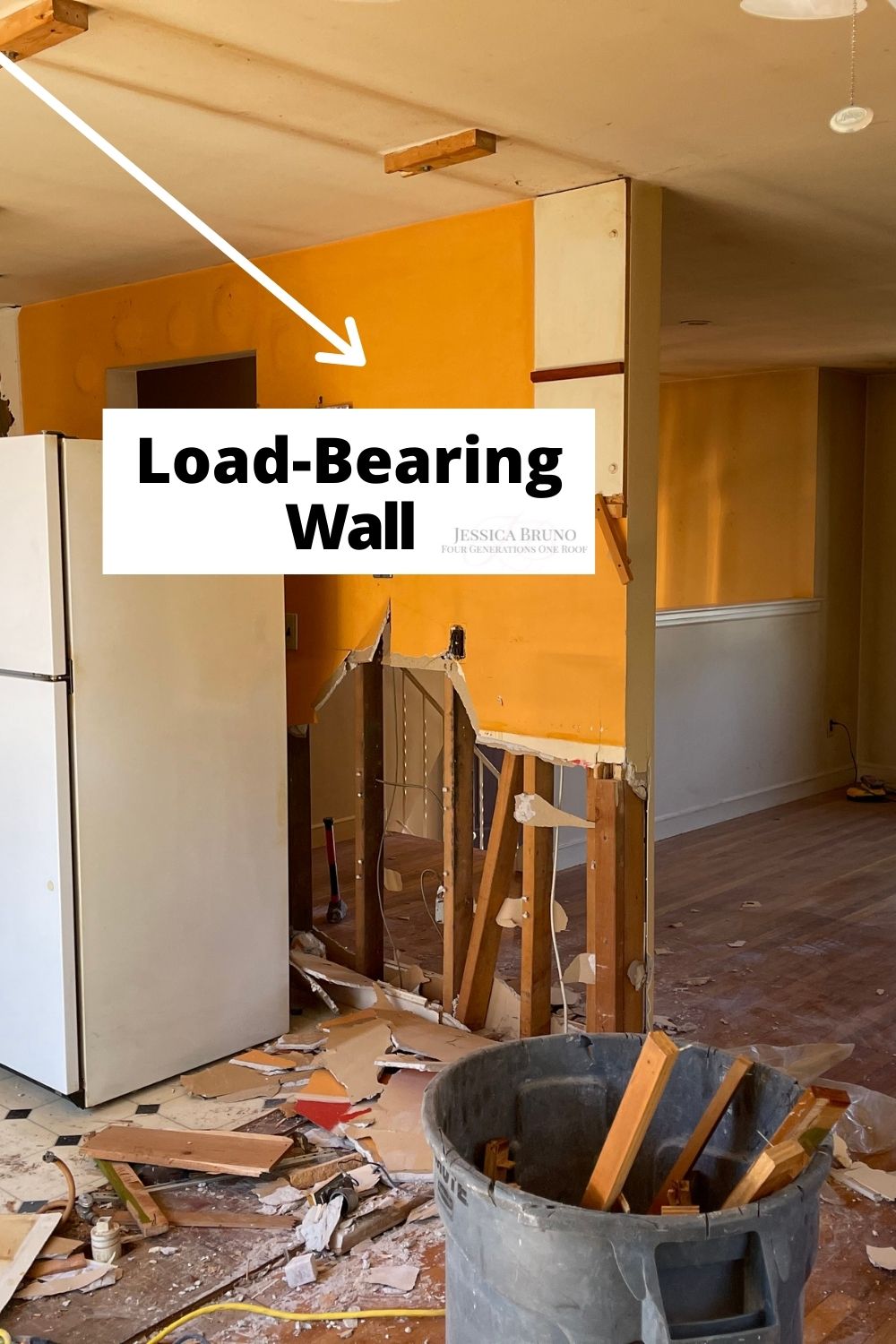
Let’s take a look at this kitchen remodel and see why opening up a load bearing wall between the kitchen and living room was a no-brainer!
What Is A Load Bearing Wall vs Non Load Bearing Wall?
Before we get started talking about removing a wall between the living room and kitchen, let’s discuss the difference between a load bearing and non load bearing wall.

A load bearing wall is a wall that supports the structure above.
A non load bearing wall does not support any structure above.
Traditionally, older homes were not made to be open concept, but now that everyone is renovating older homes and creating open concept living spaces, walls are being torn down left and right.

In order to tear down load bearing walls though, you need to install engineered beams to take the place of those walls. Otherwise, your roof (or whatever is above) will collapse, and that would make for a really bad day!
How To Tell If The Wall Between Your Kitchen And Living Room Is Load Bearing
This is probably the first question you’re asking yourself: is that wall actually load bearing, or can you just knock it down?
Here are the telltale signs a wall is load bearing:
- The wall runs perpendicular to your floor joists (if you can see them in the basement or attic, this is your biggest clue)
- It’s an exterior wall (these almost always carry load)
- It’s located near the center of your house (center walls often support roof structure)
- There’s a beam or wall directly above or below it in the basement or upper floor
- The wall is thicker than standard interior walls (sometimes doubled up 2x4s or 2x6s indicate load bearing)

In this split level house (you can see the load bearing wall above on the right side before Jim removed it). The wall separating the kitchen from the living room ran right through the center of the home and was directly supporting the roof structure. Which is a classic load bearing situation.
Here’s what you need to know: Even if you’re 99% sure a wall is load bearing based on these clues, you cannot proceed without hiring a structural engineer to confirm and provide calculations. (More on that in a minute.)
Is It Safe To Remove A Load Bearing Wall In A Kitchen Remodel?
The short answer is yes, but it’s a lot more involved than just tearing down the wall.

As you can see above, the walls create a boxy look and make it difficult to entertain.
Load-bearing walls support the weight of the structure above, so removing one without proper precautions can lead to serious structural issues.
A licensed General Contractor and a certified structural engineer will assess the structural integrity of the wall and provide suitable alternatives. Such as adding support beams or columns or a hidden beam to ensure the safety and integrity of the home.

A certified structural engineer will do all kinds of load bearing wall calculations (way above my head to even understand!) Which determines the size and type of beam that will need to be installed to support the structure above.

Opening a load bearing wall between kitchen and living room can be somewhat costly, but in my opinion (as you can see above), the open concept style adds a significant increase in value to your home.
The purpose of removing the wall is to create open concept living space that we feel will significantly increase the value of the home.
Don’t believe me?
Click through this post (image below) which is Jim’s split level home sold for 80K over asking price. Jim opened up his kitchen, dining and living room walls and added vaulted ceilings, which is very unique for a split level home.

When it came time to sell, he ended up with 5 offers well over asking and the final accepted offer was $80,000 over asking price.
How Much Does It Cost To Remove A Load Bearing Wall Between Kitchen And Living Room?
It depends on the size and complexity of the wall (as well as any other additional work that may be necessary).
Generally, it can cost anywhere from $5,500 to $8,500 for a basic removal job for a single load-bearing wall.

The cost could increase if there is more structural work involved or if the wall spans multiple floors or has been built with special materials.
For this kitchen project, an engineered beam needed to be constructed by a professional which involved architectural costs plus the labor to install.
Material Cost And Items To Consider When Removing Kitchen Wall:
- Architect costs to engineer beam
- Cost of beams
- Demo of existing wall and installing bracing for new beam
- Installing new beam
- Fixing ceiling, re-plastering and painting from where wall was removed
- Fixing flooring (from where the wall was) and/or installing new floor
- Paint and finish work involved tying new rooms together
The big costs are hiring the engineer and the labor costs to remove the wall, install a beam and the finish work involved in tying the rooms together.
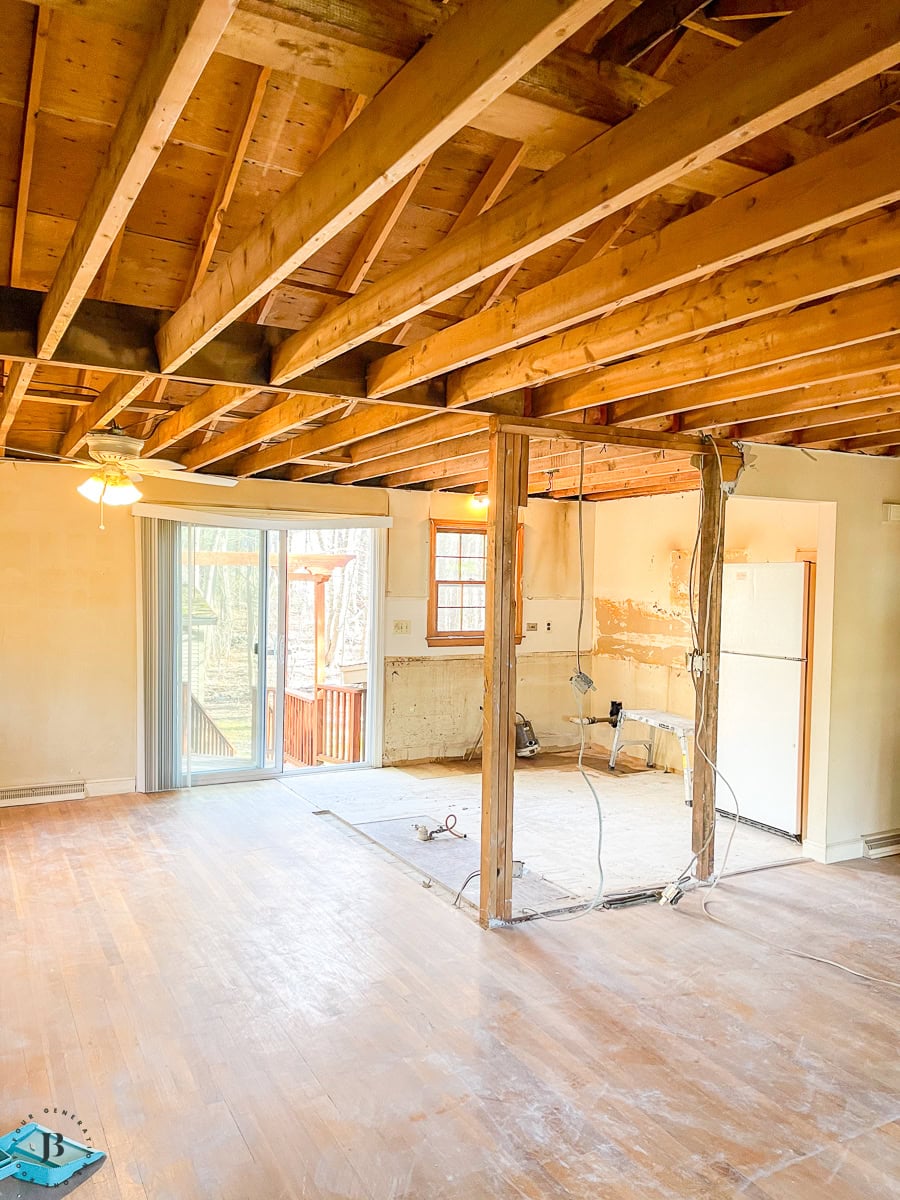
The cost of the beams for this project were under $1000. Labor and engineering costs vary depending on the size and area of the country you live.
Removing Load Bearing Wall Between Kitchen And Living Room: The Process
Once the partition walls in the kitchen were removed, it was time to tackle the load bearing wall.

We left the wall below (removed the sheetrock and left the 2×4 studs) as this is a load bearing wall.

Once we have the engineered beam installed, we will remove the existing wall completely.
Want to see how we installed the load bearing beam? Click through this post, how to remove a load bearing wall and install a support beam in the attic, to see the detailed installation process with step-by-step photos.
Knocking Down The Wall Between Kitchen And Dining Room
Jim got down and dirty this day during demo and with the help of his 4 other guys, they had this entire house (first floor and basement) completely gutted in 1.5 days.

The ceiling in the kitchen and living room will be completely removed. Which is going to make this space look so much bigger!
Load Bearing Wall Removal Before And After: Kitchen + Living Room
Here is a quick look at the kitchen and dining room before the load bearing wall was removed.
Here is the completely new renovated kitchen below.

Yes, this is the same angle as the image above!
As you can see, the ceiling is now vaulted with shiplap. We added skylights, a new patio glass door, a large center kitchen island and expanded the kitchen layout featuring new kitchen cabinets.
The before and after of this split level kitchen after removing the load bearing wall are amazing!
Benefits Of Removing A Load Bearing Wall In The Kitchen
You may be wondering, “what are the benefits of removing a load bearing kitchen wall?” Removing a load bearing wall in a kitchen offers several benefits.

- Opening up the kitchen allows for more space, creating a better flow between the living/dining area and the kitchen.
- Let more natural light into the kitchen, brightening up the room and creating a better atmosphere for cooking and entertaining.
- Provide more counter space which is essential for any kind of meal preparation or home entertaining. As you can see, we were able to add a large center island.
- Provide more storage space for things like pots, pans and other large kitchen items that don’t always fit in existing cabinets. The expansive kitchen now offers more room for cabinetry and a center island packed with storage.
- Finally, removing a load bearing wall can add character to a room. Creating a more modern look while also allowing you to be creative with your design choices.
Frequently Asked Questions
Absolutely! Especially in split level homes where rooms tend to be small and choppy. Opening up the wall between your kitchen and living room creates better flow for entertaining, brings in more natural light, and significantly increases resale value. Jim’s similar split level project sold for $80,000 over asking price, largely because of the open concept transformation.
The actual structural work (installing support beam, removing wall, finishing framework) typically takes 2-4 days with a professional crew. But you need to factor in time for structural engineer drawings (2-4 weeks), permit approval (1-4 weeks depending on your town), and finish work after inspections. Total timeline from planning to completion: 6-10 weeks.
Yes, removing a load bearing wall requires building permits in virtually every municipality. Your licensed contractor will pull permits with your structural engineer’s stamped drawings. Skipping this step creates major problems when you try to sell, as home inspectors will flag unpermitted structural work.
No. This is not a DIY project under any circumstances! The structural risks are too high, and you need licensed professionals for both the engineering calculations and the physical work. Even experienced contractors won’t touch this without proper engineer drawings and permits.
Your roof will sag, crack, and potentially collapse. Load bearing walls are literally holding up the structure above them. Remove that support without replacing it with an engineered beam, and you’re risking catastrophic structural failure. This is why professional installation with proper beams is non-negotiable.
In most cases, yes. Especially in older homes with choppy layouts. Open concept kitchens that flow into living spaces are highly desirable to buyers. Just make sure the work is done professionally with proper permits, because unpermitted structural work will actually decrease value and scare off buyers.
Be sure to click through this post, Opening up a kitchen wall . We removed a metallic glass mirror wall between our kitchen and dining room at our previous house (this was a large kitchen makeover!) and this post, split level house kitchen remodel, to see how Jim also removed this load bearing wall at a clients house.
More Split Level House Remodeling Posts You Will Love
- Split Level House Tour before (this is what the house looked like the day we bought it)
- Opening a load bearing wall between kitchen and living room (the kitchen before)
- How to remove a load bearing wall and install support beam (the detailed installation process of the load bearing beam)
- Installing shiplap on vaulted ceiling (removing the ceiling and installing shiplap)
- Quality Wolf kitchen cabinet review and installation (kitchen installation blog post)
- How to widen your front door (front door makeover)
- Why we love the vinyl plank flooring basement makeover (flooring installation in the
- basement)
- Why we picked prehung solid core interior doors by Masonite (all of the interior doors)
- How to modernize a split level home with black windows (installation of new windows)
- Split level exterior remodel before and after (new exterior siding and makeover)
- Split Level Kitchen Remodel before and after (kitchen before and after)
Disclosure: Identifying and removing a load bearing wall is for a licensed professional and not a DIY homeowner project. Hire a professional and check with your local building department for building code and permit requirements.

Meet Jessica
What started as a hobby, Jessica’s blog now has millions of people visit yearly and while many of the projects and posts look and sound perfect, life hasn’t always been easy. Read Jessica’s story and how overcoming death, divorce and dementia was one of her biggest life lessons to date.